


Richa Kondapally: Committed
As a 2025 - 2026 Mental Health Ambassador with Selena Gomez’s Rare Beauty, a Patient Advisor at Stanford Health Care, and a junior at UC San Diego majoring in global health, Richa Kondapally was inspired to create Committed because of her own mental health journey and experiences with storytelling.
The Hidden Opponent sat down with Richa to discuss her background and the process of creating this film.
Can you share more about your experiences with mental health?

Growing up, I excelled in everything, from school to sports to other extracurriculars. It became the standard I was pushed to, the standard I set for myself, and hence the only standard I ever knew.
In 6th grade, I had my sights set on Oxford for my undergraduate education. Astronomy fascinated me. I would come home after school every night, open my mom’s laptop, and watch CNN’s Space + Science. During the summers, my neighborhood friend and I would bike up to this hill near our houses. We would lie on the ground, blast music, and stare at the stars, coming up with answers to existential questions for hours on end, while our moms were waiting for us to come home.
I wanted to get a PhD in black hole theory from Cambridge, then do research at the Mauna Loa Observatory in Hawaii, before training to work on the International Space Station to conduct space biology research. I knew it was a lofty dream, but I was very intellectually curious from a young age. I never really thought twice if something seemed realistic or not.
However, there was a big period in my life, not so many years ago, where I lost that childlike wonder and curiosity.
In middle school, specifically 8th grade, I went through some things that broke me in many ways. The resulting deteriorating mental health affected a lot of areas of my life. I slowly lost my love for dance and the discipline that comes with being a competitive dancer. My self-doubt eventually caught up to me and affected my club volleyball performance. My grades dropped to a letter grade I had never received before.
Oxford and Cambridge suddenly felt out of reach. My goals felt completely unattainable. I stopped trying in everything. I shut out a lot of people in my life, for a very long time.
I would ask myself, “What's wrong with you?” I had a roof over my head, access to a private education, and an objectively very privileged life. I couldn’t be happier, but I felt the opposite.
It was a lot of nights crying myself to sleep.
It was the hardest year of my life, and I was so young.
It took a long time to feel comfortable asking for help. So over time, during high school, when I started to feel better and got into advocacy, my main thing was that I didn’t want others to go through that pain. At any age, that level of internal struggle is insufferable.
Were you able to explain to people what that pain felt like?
It can be hard to explain what depression feels like. It’s not a physical pain that someone can better understand. So I actually compare a surgery I had to what I felt in eighth grade. I talked about my ovarian teratoma surgery at the end of my junior year of high school. I got surgery 2 days after I found out I had a tumor in my body. Cancerous ovarian teratomas in teenagers are a very rare case. My doctors didn’t know if it was cancer or if the surgery would result in complications until after I had the tumor removed. Fortunately, the tumor was noncancerous, and the surgery was successful. But it took a long time to not be scared to sit in a hospital room again. It wasn’t till the beginning of 2025 that I wouldn’t cry before an upcoming appointment or try to postpone any scans or checkups I had for post-surgery monitoring.
As difficult as the surgery was, the stress, uncertainty, and fear of the moments leading up to it and the recovery process itself were so much easier to go through than what I was going through in eighth grade and into high school.
That might seem really far-fetched, but that is the reality of depression.
Today, I am doing better. My hope is that speaking up about my experiences can help someone going through a similar thing feel more heard and know that it’s okay to ask for help. I’m not doing as much as I want to be in the advocacy space, and that’s okay. I think a lot of mental health advocates carry that obligation, and honestly guilt, that now we’re able to live happier, that we aren’t doing enough for people who are still going through a lot. And that guilt can be overwhelming, but I’ve also learned over time that the most important thing is caring, being kind to yourself, and knowing that impact is impact, no matter how seemingly small it may seem.
What shifted in you when you advocated prioritizing mental health?
My parents were always in survival mode growing up in India and after immigrating to California. Even though they became a lot more financially successful than my grandparents, for them, mental health was an afterthought. That mentality definitely affected how I navigated mental health early on in my life. I dismissed my own struggles, partly because I was ashamed to ask for help, and partly because what I was feeling was so new and scary, I was just trying to process it first.
Today, my mom and dad are the biggest proponents of my mental health, but it wasn’t always like that. There is this cultural stigma around mental health that isn’t really acknowledged between immigrant parents and their kids. When my mom saw me mentally struggling in high school, she eventually dismissed her stigma, uncertain and scared about her shift in beliefs, so her daughter could be happy. It’s the greatest form of love she has taught me, and my mom has been through so much.
I was a little nervous, but my parents were the ones who encouraged me to attend Bring Change 2 Mind’s annual free high school summit, which was a really amazing moment I hope every high school student can experience. It’s such a beautiful day where your vulnerability is celebrated. It’s where I began with my advocacy.
How did you become a Mental Health Ambassador with Selena Gomez’s Rare Beauty?
I have a LinkedIn connection who is a mental health advocate and was on Rare Beauty’s inaugural Ambassador cohort, and she reposted the opportunity. Although I thought it was a long shot, I knew I would regret not applying. Thinking back, I’m very grateful I saw the opportunity and felt confident enough in my professional experience to apply.
The Rare Beauty program has given me a lot of clarity about my career, but it has also challenged me in the best possible ways. And being able to figure that out through conversations with fellow Ambassadors and people at Rare Beauty has been nothing short of an immense privilege.
However, getting or not getting this opportunity wasn’t going to change the fact I was very much set on producing Committed.
What inspired you to produce Committed?
College athletes are among the most ambitious and generous individuals I know. To show up and give it their all for a sport almost every day of the week, despite how they are feeling, takes incredible vulnerability and resilience. So, beyond my own experiences with mental health, I really wanted to highlight theirs too.

Actually, it’s been a while since I’ve watched televised sports, but growing up, it was my favorite pastime. As a kid, family friend get-togethers were basically watch parties of the 49ers, Giants, and Warriors. My dad was a season ticket holder for the Golden State Warriors. I have photos where I don’t even remember being at the games.
He was so passionate about making sure my older sister and I shared his love for basketball, so a big part of my childhood was going to the games at Oracle Arena in Oakland. If we didn’t attend the games, the deal was that you had to show Mom you finished your homework before you could watch it on TV.
We had ESPN, so my dad would pre-record the games, and then the four of us promised each other not to look up who won. We would fast-forward the ads like clockwork, all four of us on the seats of our sofa every second of the game, about to stand up and do a signature scoring celebration of one of the players. After a dub, my sister and I would run up to the TV screen, jumping up and down, screaming with joy, the same reaction we had live at Oracle.
It was a completely different high. I definitely miss it.
So it feels very full circle to be carrying out such a big personal project on the topic of sports, which holds some of my fondest childhood memories.
It wasn’t a brainstorming session, really, but I think last July, I was just thinking about what I wanted to do for the upcoming school year. I was like how can I combine my passion for mental health, storytelling, and media, and that’s when I thought of Committed.
But that idea wouldn’t have come to fruition if I hadn’t written it down. I’m a very heavy Notes app user. My mind is always swarming with ideas at the most random times, so having a place where I can document my ideas and goals has been really helpful to bring them to fruition over the years.
Please tell us more about Committed and what you aim to share through the film?
This film centers on 3 student athletes but also goes beyond sports. Committed is about dreams, the reality of being a college student today, and what it means to find balance amidst all the craziness.
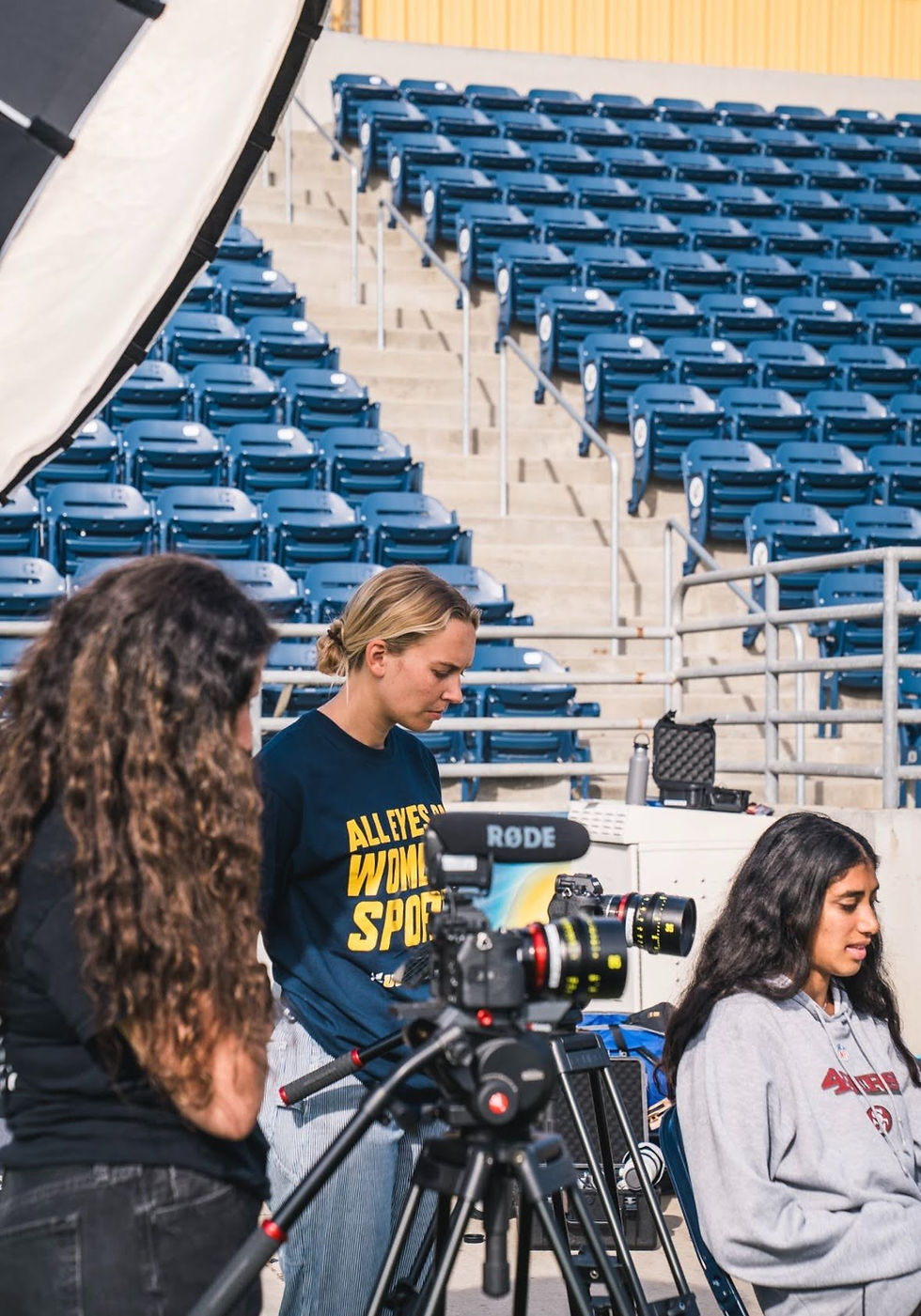
My goal is not just for the audience to connect with the athletes' stories, but also with the people behind the camera. This is a project led solely by students. Despite our different career ambitions, personalities, majors, and priorities, we have come together to bring to life a film that is meaningful to all of us. I think there's so much beauty and power in that. Additionally, the athletes and a majority of our creative team are people of color, which remains uncommon in the film industry. That mattered to me – the diversity of our cultures, walks of life, and the diversity of ideas it brought into the narrative process.
I am South Indian. There aren’t many Indian Americans who choose careers in the arts. I’m not sure yet what I want to do for my career, but I would be lying if I said a career in film production and creative strategy doesn’t interest me.
I want people to see that and know that if you really love something, whether that’s sports, the arts, humanities, STEM, or a combination of them, that you can do it. And do it on your own timeline, whatever that may mean for you. I think it comes down to trusting yourself to pursue a project or career you genuinely love and not listening to the people who will tell you it isn’t realistic, even if they have your best interests at heart.
Where are you currently in the process of producing Committed? And where/when should our audience look for the final product?
It’s been a week since we wrapped up filming. The plan is to release Committed in early August on YouTube. I am someone who likes to stick to timelines, but the most important thing is to put out a film we are genuinely happy with and one that appropriately depicts the stories of Tegan, Adam, and Meilani, Committed’s 3 athletes. That might mean pushing back the release date. Taking extra time to incorporate feedback from non-athletes, athletes, family, friends, and friends of friends will help us make a more impactful film for a larger audience.
For anyone who wants to follow along, our Instagram is @committedthefilm.
What are some ways you take care of your own mental health, especially as a busy college student?
Junior year was my busiest year yet in college. There were also many things I wanted to achieve that I didn’t. So it was a lot of trying to be kind to myself and unlearning things that had once worked with my school schedule.

It was also a lot of redefining what balance means. For me, success always meant having fun and having a life outside of work. I haven’t gotten there yet. Making that work has been hard, since working hard 24/7 since high school has become the default, but my goal is to start prioritizing that more starting this summer as I balance my projects with going out and being with friends.
The biggest thing for me in managing my mental health is spending time with loved ones. I prefer to deal with problems on my own, to the point where it can get really stressful, and I’ll tend to isolate myself. My really close friends know I’m like that, so they always reach out to see if we can hang, and I’m super grateful for that.
But I also don’t want to take that for granted. I’ve been telling myself recently I need to work on being a better friend in that way, to show up for them more and reach out first, the way they do for me. Because at the end of the day, I’m not the only one who’s busy or has silent struggles they have to deal with. I get stuck in my head a lot, and I forget that sometimes. I’m not proud of that, and I’m trying to work on it.
What message would you give to any student-athletes or college students who are looking into producing their own short film or creative projects? Any major takeaways from this process?
I really like this question. Being a producer, director, filming some scenes myself, and leading social media and overall strategy for Committed , the whole academic year took up a lot of my time. Not to say that I didn’t enjoy wearing a lot of hats, but as a student with other extracurriculars, it was definitely a little more stressful than I anticipated. But I knew from the beginning I wanted this project to have the most reach and impact, so I invested a lot of time.
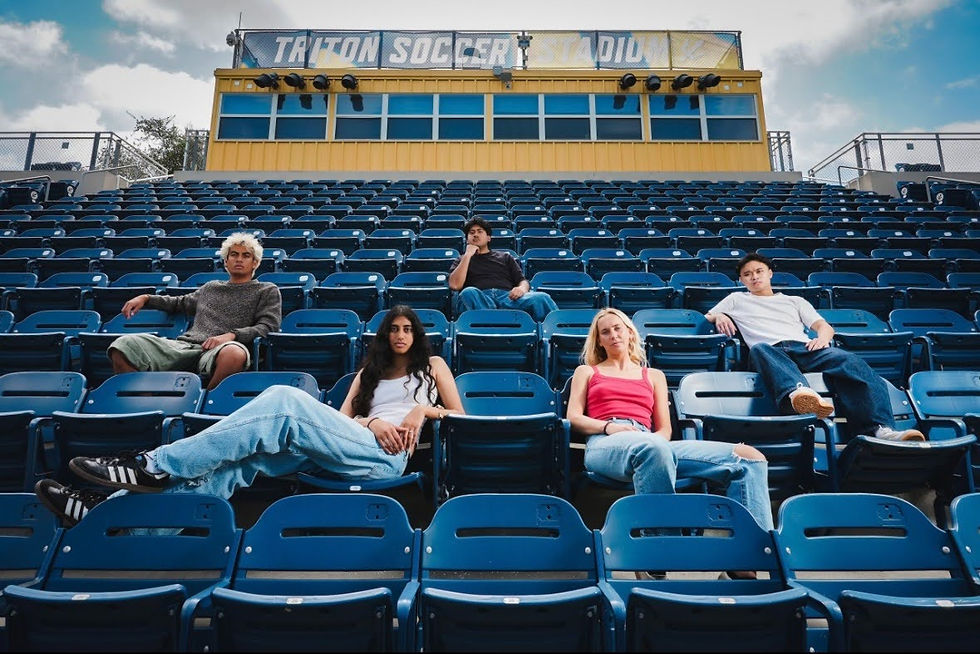
Even with some setbacks, it was honestly easier to come back from those because of my team. When you work with people who are so hardworking and have big ambitions, it’s very easy to want to keep working hard, to make sure this project is seen through to the end.
In terms of collaboration, you can have an incredibly well-thought-out idea and vision for a film, but if you don’t know how to communicate that well, a lot can get lost in translation. Until the sophomore year of college, all of my passion projects have been independent, so I didn’t understand the depth of how important it was to make my vision clear. If I were to do this again, I would have communicated my vision more clearly much earlier on. It’s such an important aspect if you want any collaborative project to really succeed.
At the scale that we filmed this, there were also a lot of moving parts. Beyond being really organized and focusing on building a team you genuinely trust, I think knowing why you want to create something is super important, whether that be a narrative film, a documentary, an animation, etc. Creating art can hold so much meaning for the audience if you know your why.
As a Producer and Director, you also have the responsibility of making sure a project is still achieving a goal. If the initial purpose has changed, that’s okay. That honestly happens more often than not, but I think continually establishing the why as you advance on a project like this is important. Because once you’ve lost that reason, you can easily lose that passion to continue.


